


The Sleeping Giant: Unleashing India's Tourism Revolution by Shrikant Soman
- Shrikant Soman
- Feb 28
- 23 min read

The Sleeping Giant: Unleashing India's Tourism Revolution
By Shrikant Soman
HIghlights
The Trillion-Dollar Magnet: Activating India’s Tourist Industry for Immediate Global Dominance
Fueling a Trillion-Dollar Economy: Why the Indian Tourism Sector is Our Most Powerful Sovereign Asset
The Sleeping Giant Awakens: How the Tourist Industry Will Reshape India’s Economic Map
Hardware Ready, Software Needed: Standardizing the Tourist Industry to Hit the National Jackpot
Atithi Devo Bhava 2.0: Transforming the Tourism Sector into a Seamless Revenue Machine
From Chaos to Connection: The Execution Revolution Required in India's Tourist Industry
The End of Income Tax? How a High-Performance Tourism Sector Can Fund India’s Future
Monopolizing Wonder: Why the Indian Tourism Sector is Our Shortest Path to a $10 Trillion GDP
The Sovereign Dividend: Why the Tourist Industry is India’s Greatest Untapped Gold Mine
As I traverse the length and breadth of our nation, I am consistently struck by a profound sense of amazement. From the snow-capped peaks of the Himalayas to the intricate carvings of Dravidian temples, India possesses a cultural diversity and a 5,000-year heritage that no other country can claim. Yet, this awe is shadowed by a sobering reality: our tourism revenue remains abysmally low on the global stage. It is heartbreaking to see nations with a fraction of our land and history outperforming us by massive margins. If we could only bridge this gap and harness our true potential, it would be nothing short of a national game-changer. Beyond the sheer influx of foreign exchange, a thriving tourism sector would be a colossal engine for employment, providing livelihoods for millions and transforming the economic fabric of our local communities.
Based on current reports for 2025-26, here is a breakdown of the specific areas where we are falling behind compared to countries like Spain or Thailand.
1. The "Last-Mile" Connectivity Gap
While India has built world-class airports in Delhi, Mumbai, and Bengaluru, the journey after you land is where the trouble begins.
The Issue: Many of our 44 UNESCO World Heritage sites are in remote areas. For a foreign tourist, reaching a site like Ajanta Caves or Hampi involves multiple modes of transport that are often unorganized or lack "night-landing" facilities at nearby smaller airports.
Comparison: In Spain or Japan, a high-speed train drops you within walking distance of major historic sites. In India, the "travel fatigue" often outweighs the "travel joy."
2. Public Sanitation & "Visual Hygiene"
This remains the #1 deterrent in international surveys (LocalCircles 2026).
The Reality: Only 14% of tourists in recent surveys rated public sanitation at Indian tourist sites as "good."
The "Pathetic" Factor: Over 38% of respondents in 2026 described the conditions of public toilets and surroundings as "pathetic." Even at premium sites, the lack of clean, standardized restroom facilities remains a major hurdle for high-paying Western tourists.
3. High Taxation & "The Fiscal Cliff"
India is often perceived as "expensive" for what it offers at the premium level.
Tax Barriers: Luxury hotels (above ₹7,500/night) are taxed at higher GST brackets. This makes a luxury stay in a Rajasthan palace significantly more expensive than a luxury villa in Bali or Phuket.
Price Competitiveness: While India is cheap for "backpackers," it is often cost-prohibitive for the high-spending middle-class foreign family compared to Vietnam or Thailand.
4. Fragmented Branding (The "State vs. Center" Problem)
Disconnected Marketing: If you look at "Incredible India" ads, they are often generic. On the other hand, states like Kerala, MP, and Gujarat run their own separate high-budget campaigns.
The Result: For a tourist in London, it’s confusing. They don't see a unified "India" itinerary; they see a fragmented collection of states. This prevents the creation of "Cross-State Circuits" (e.g., a single seamless tour covering the Himalayas across three different states).
5. Security & Crowd Management
The "22% Confidence" Stat: In 2026, only 22% of travelers felt that crowd management and security at major sites were effective.
The Hassle Factor: Foreigners frequently complain about "touts" and aggressive sellers at major landmarks like the Taj Mahal. This creates a "hassle-heavy" experience that discourages "word-of-mouth" recommendations, which are the lifeblood of tourism.
Where We Are Losing Ground: A Case Study (Vietnam)
As of early 2026, Vietnam is rapidly becoming the "new India" for global travelers.
Why? They have implemented a 90-day multiple-entry e-visa, focused heavily on "low-impact" luxury, and have synchronized their flight connectivity with India, China, and the West.
The Danger: We aren't just losing to Europe; we are losing to our immediate neighbors who are moving faster on policy and infrastructure.
Summary of Gaps
Category | India’s Current Status | Global Best Practice |
Sanitation | Low (14% satisfaction) | Standardized & Managed (e.g., Singapore) |
Connectivity | Airport-centric | Last-mile seamless (Rail/Shuttle) |
Taxation | High for Luxury | Incentivized for Tourism |
Visa | Improving (E-visa available) | Seamless/Visa-free (Thailand/Vietnam) |
The "Multiplier Effect": Why One Tourist Matters
The true power of tourism lies in its unique ability to distribute wealth directly into the hands of the common man. Unlike many industries that remain confined to urban corporate offices, tourism is a "trickle-down" miracle. Consider a single foreign traveler visiting a rural heritage village in Rajasthan or a backwater hamlet in Kerala. This one individual doesn't just spend money; they ignite a localized economic chain reaction.
The Homestay Host: Instead of a faceless hotel chain, the revenue goes to a local family providing a room, instantly boosting their household income and standard of living.
The Culinary Chain: The food the tourist eats is sourced from the local farmer and cooked by a village resident, ensuring that the "farm-to-table" profit stays within the community.
The Traditional Artisan: A traveler buying a single hand-woven shawl or a piece of pottery provides a direct incentive for our master craftsmen to keep their ancient, dying arts alive.
The Service Providers: From the local youth working as a certified guide to the auto-rickshaw driver and the small-shop owner selling bottled water, every rupee spent circulates through at least five different local hands.

In fact, global economic data suggests that for every one direct job created in tourism, nearly three indirect jobs are supported in allied sectors like agriculture, construction, and handicrafts. For a nation like India, with a massive youth population seeking meaningful work, tourism isn't just a "leisure" industry—it is our most potent tool for decentralized rural employment and poverty Alleviation.
The Efficiency Gap: How the World Outpaces the Giant
"To understand the magnitude of our missed opportunity, we must look beyond total visitor numbers and examine 'Tourism Efficiency.' By measuring how much revenue a nation generates relative to its physical size and its population, we can see a clear picture of how effectively a country 'monetizes' its assets. When we place India alongside global peers—from ultra-luxury city-states to emerging regional competitors—the contrast is startling. While India possesses a vast landscape and a massive population, other nations have mastered the art of extracting maximum value from every square kilometer of land and every citizen in the workforce.
"The world is a book, and those who do not travel read only a page." Saint Augustine
The following data, based on 2024-2025 estimates, reveals the 'efficiency benchmarks' that India must strive to reach if it wishes to turn its heritage into a world-class economic engine.
It is fascinating to see how these diverse nations—from tiny city-states like Monaco to emerging giants like Uzbekistan—manage their "tourism efficiency" so differently than India,
Here is the breakdown of how these specific countries perform. These figures are based on 2024-2025 estimates.

Tourism Revenue Comparison (The "Efficiency" Metrics)
Country | Land Mass (Approx. sq km) | Population (Millions) | Revenue per 100 sq km | Revenue per 1,000 Persons |
Monaco | 2 | 0.038 | $45,000,000,000 | $2,360,000 |
Singapore | 734 | 6.0 | $3,950,000,000 | $483,000 |
Switzerland | 41,285 | 8.9 | $53,200,000 | $247,000 |
Italy | 301,340 | 58.9 | $18,500,000 | $95,000 |
Hungary | 93,030 | 9.6 | $9,800,000 | $94,000 |
Uzbekistan | 447,400 | 36.0 | $490,000 | $61,000 |
Vietnam | 331,210 | 100.0 | $6,300,000 | $21,000 |
India | 3,287,263 | 1,450.0 | $1,120,000 | $2,500 |
What These Examples Teach Us
1. The "Concentrated Wealth" Model: Monaco & Singapore
These two prove that Size is Irrelevant.
Monaco has virtually no land, yet its revenue per 100 sq km is astronomical because it targets the "Ultra-High Net Worth" traveler.
Singapore creates "Artificial Attractions" (Gardens by the Bay, Sentosa) to monetize every square meter.
The Lesson: India doesn't need to fix every village to increase revenue; it needs High-Yield Hubs that function like Singapore.
2. The "Culture & Connectivity" Model: Italy & Hungary
Italy is India’s closest competitor in terms of "History per square km." However, Italy earns nearly 18 times more per 100 sq km than India.
Hungary is a great example of a "Landlocked Success." By making Budapest a global "Party and Spa" destination, they earn almost as much per 1,000 people as Italy.
The Lesson: Specialized branding of a single city (like Varanasi or Jaipur) can drive national numbers.
3. The "Service Precision" Model: Switzerland
Switzerland treats tourism like a Watchmaking Industry. Everything is on time, clean, and premium.
They earn $247,000 per 1,000 people. If India reached this level of service efficiency, our tourism revenue would be larger than our entire GDP.
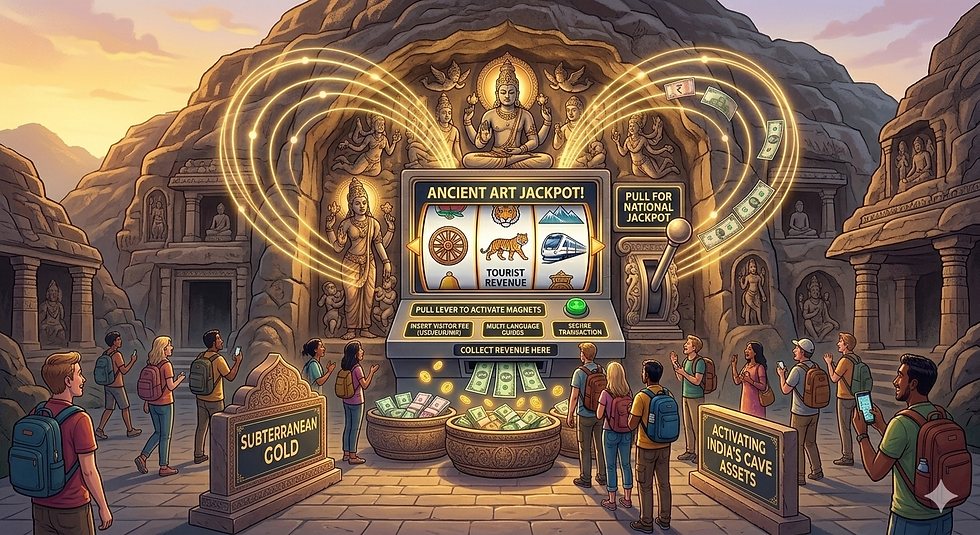
Our Ancient Art Treasure is a Jackpot waiting to be reaped
4. The "Rising Competitor" Model: Vietnam & Uzbekistan
Vietnam is the "New India" for many Westerners—it offers spirituality, beaches, and food but with better sanitation and easier visas.
Uzbekistan is the "Dark Horse." They recently removed visa requirements for almost 100 countries and modernized their "Silk Road" infrastructure.
The Lesson: If India doesn't act fast, these smaller neighbors will capture the "curious traveler" market.
Conclusion
"If India were to achieve the population-to-revenue efficiency of even Vietnam (a fellow developing nation), our tourism income would jump from ~$37 Billion to over $300 Billion. We aren't just missing a small window; we are missing an entire economic revolution."
Benchmarking the Giants: Where India Stands Against Global Leaders
While the previous data highlighted the efficiency of diverse economies, it is equally vital to compare India against the world’s most established tourism powerhouses. By looking at 'Tourism Density'—the sheer revenue generated per unit of land and per thousand citizens—we uncover a startling 'opportunity map.' This comparison isn't meant to discourage; rather, it serves as a blueprint for the massive growth that awaits us if we can bridge the gap between our vast resources and our current monetization levels.
Comparison of Tourism Income Efficiency (2024-25)
Values are based on International Tourism Receipts (Foreign Exchange Earnings).
Country | Revenue per 100 sq km of Land | Revenue per 1,000 Persons |
United Kingdom | $34,700,000 | $1,242,000 |
Spain | $21,000,000 | $2,218,000 |
France | $13,970,000 | $1,132,000 |
Thailand | $8,323,000 | $601,000 |
India | $1,121,000 | $26,000 |

The Strategic Takeaway
1. The Land Mass Paradox
As the table illustrates, Spain generates about $21 million for every 100 sq km of its territory. India, despite having over 42 UNESCO World Heritage sites and a sprawling 7,500 km coastline, generates only $1.1 million for the same area. The lesson is clear: India doesn't need more land or more monuments; it needs to increase the "yield" of its existing destinations through world-class infrastructure and high-value services.
2. The Population Multiplier
This is the most dramatic figure for our national economy. For every 1,000 citizens, Spain earns over $2.2 million from foreign tourists. India earns only $26,000. Currently, every Spaniard effectively 'hosts' and benefits from a massive volume of global wealth. If India reaches even 10% of Spain’s efficiency, our tourism income would skyrocket to over $300 Billion, potentially making it the largest contributor to our GDP.
3. Revenue vs. Footfall: The Path Forward
The gap exists because of the type of tourism. Nations like France and the UK focus on high "spend per tourist," where visitors utilize expensive heritage stays and premium transport. Thailand has mastered "high-volume" efficiency, making every kilometer of its coast a billion-dollar asset. For India to leapfrog, we must pivot toward High-Value/Low-Impact tourism—leveraging luxury wellness, spiritual retreats, and premium heritage circuits—to maximize income per visitor.
"While India is a giant in geography and population, in the world of tourism economics, it is currently a 'micro-economy' waiting to explode. If we utilized our land at the same efficiency as Thailand, our tourism revenue would be nearly 8 times higher than it is today."

Learning from the Disruptors: The Global Blueprints for Success
"While the data shows India as a sleeping giant, the global landscape is being redrawn by nations that have treated tourism not as a side-effect of culture, but as a core national mission. By studying countries that have radically transformed their tourism fortunes in under a decade, we find a common thread: a shift from being 'resource-rich' to 'execution-obsessed.' From the desert sands of the Middle East to the historic Silk Road of Central Asia, these disruptors provide a clear roadmap for India to follow."
Case Study 1: The Saudi Arabian "Radical Shift" (2019–2026)
The most dramatic transformation in modern tourism history belongs to Saudi Arabia. Until 2019, the Kingdom was virtually closed to leisure travelers. Today, it is the fastest-growing destination in the G20.
Metric | 2019 (Pre-Pivot) | 2025–2026 (Latest Results) |
Total Visitors | ~40 Million (Mostly Pilgrims) | 122 Million |
Tourism Spending | ~12 Billion USD | ~$81 Billion USD |
GDP Contribution | 3.8% | 5% (On track for 10% by 2030) |
Visa Efficiency | Restrictive / Religious only | Instant E-Visa for 66+ countries |
How they did it (Lessons for India):
The E-Visa Revolution: They replaced a months-long process with a 10-minute digital application.
Giga-Projects (NEOM & Red Sea): They didn't just market old sites; they built "future-cities" from scratch to attract luxury travelers.
Global Branding: By hosting events like Formula 1 and hiring icons like Messi, they rebranded an entire nation’s image in just 48 months.

Case Study 2: The Efficiency Experts (Monaco, Singapore, Switzerland)
These nations prove that success isn't about how much land you have, but how you use it.
Monaco & Singapore (The Urban Miracle): These tiny nations generate billions by creating high-value "Special Tourism Zones."
Lesson for India: Instead of trying to upgrade every city at once, India should focus on making specific hubs (like Lakshadweep or Hampi) 100% world-class.
Switzerland (Service Precision): They earn nearly $250,000 for every 1,000 citizens. They treat tourism like watchmaking—every train, hotel, and guide operates with 100% reliability.
Case Study 3: The Emerging Threats (Vietnam & Uzbekistan)
These are the nations currently "stealing" India's market share.
Vietnam: Reached a record 21.2 million international visitors in 2025. They have siphoned off tourists by offering better sanitation and a thriving "night-time economy" (night markets and active street life).
Uzbekistan: The "Silk Road Pivot" saw a 46% jump in tourism in 2025 alone. They did this by simply removing visa requirements for over 100 countries and modernizing their airports.
Strategic Insight
"If a country like Saudi Arabia—which had zero leisure infrastructure five years ago—can triple its revenue, India is currently leaving hundreds of billions of dollars on the table. We are not just competing with Europe’s history; we are being out-executed by our neighbors who have less "content" but much better "execution."

The Waking Giant—Where India is Winning Today
Despite the sobering comparisons with global leaders, it would be a mistake to overlook the significant momentum India has gained in the last two years. The 'Sleeping Giant' of world tourism is finally stirring. As of 2025-26, India has broken into the Top 10 Global Tourism Economies, with the sector contributing between 5.2% to 6.6% of our GDP (approximately ₹15.7 to ₹22.5 lakh crore).
However, to truly move the needle, we must understand that India isn't just one destination; it is a 'continent-sized' buffet of experiences. To achieve the revenue efficiency of a Spain or a France, we must double down on the 'Niche Pillars' where we already have a competitive edge.
"Quality is not an act, it is a habit." Aristotle
India’s Strategic Pillars of Growth
While general sightseeing is our backbone, these three areas are where India is outperforming its peers:
The World’s Healthcare Hub: Our medical tourism sector is valued at $8.7 billion in 2025 and is on track to double by 2030. High-quality care at a fraction of Western costs is a massive revenue driver that smaller nations cannot match.
The Wellness Monopoly: With the global wellness market hitting $1.3 trillion, our roots in Yoga and Ayurveda are a 'soft power' asset that is unique to the Indian soil.
Cultural Dominance: Heritage motivates nearly 60% of our international arrivals. With 42 UNESCO sites, we have the 'inventory'; we now just need the 'infrastructure.'

"A guest is a jewel on the cushion of hospitality." Turkish Proverb
The Catalysts for a New Era
The reason for my optimism lies in the massive infrastructure push we are witnessing. For decades, the 'gap' was the journey itself. Today, that gap is closing:
Infrastructure as the Catalyst: The rapid expansion of Vande Bharat trains and the opening of massive hubs like Jewar Airport are finally providing the 'last-mile' connectivity that global travelers demand.
The Domestic Backbone: We often forget that India’s domestic tourism—boasting over 300 crore visits in 2025—is the financial safety net that allows us to build world-class facilities even when international cycles fluctuate.
Closing the Per-Capita Gap: Our goal is no longer just 'more tourists,' but 'higher spend.' While a tourist in the USA spends over $4,000, the spend in India is much lower. The shift from a 'budget destination' to a 'high-value experience' is the final frontier in our tourism revolution.
Summary Table
To show how we compare in the 'Total Revenue' vs. 'Size' debate:
Country | Land Mass | Population | 2024-25 Revenue | Revenue vs. India |
Spain | 506k sq km | 48 Million | $106.5 Billion | ~3x India's Revenue |
France | 551k sq km | 68 Million | $102.0 Billion | ~2.8x India's Revenue |
India | 3.28M sq km | 1.4 Billion | ~$36.8 Billion | The Baseline |
The Strategic Conclusion:
If India could monetize its land mass at the same efficiency as Spain, our tourism revenue would not just be in the billions; it would be in the trillions.
The Roadmap to 2030—Turning Potential into Prosperity
"As we stand in 2026, the question is no longer whether India has 'enough' to offer, but whether we can offer it with the precision the modern world demands. Our journey from a $37 billion industry to a $300 billion powerhouse is not just a dream—it is a structural necessity. To move from being a 'giant on paper' to a 'giant in reality,' we must commit to three non-negotiable pillars of transformation."

1. The 'Frictionless' Frontier: Beyond the E-Visa
While we have expanded the e-Tourist Visa to 166 countries as of February 2026, we must look at our neighbors like Thailand and Uzbekistan who have moved toward Visa-Free regimes for major markets. Reducing the cost and complexity of entry is the first step to increasing our "Revenue per 1,000 persons.
2. Infrastructure as an Experience
The 2026-27 Union Budget has officially placed tourism at the heart of national development. With the launch of the National Institute of Hospitality and the upskilling of 10,000 certified guides at iconic sites, we are finally realizing that a monument is only as good as the person explaining it. The expansion of 51 entry gateways (including seaports like Agatti in Lakshadweep) means we are finally opening the "hidden" India to the world.
3. The 'Clean India' Dividend
The Swachh Bharat Mission (Phase II) is now focusing on "Iconic Tourist Centres." We must understand that sanitation is not just a social goal; it is a direct economic multiplier. A tourist who feels safe and finds our heritage sites pristine is a tourist who stays longer and spends more.
The Final Word
The data is clear: India is the only nation on earth with the 'content' to rival a continent. If we can apply the service precision of Switzerland, the bold marketing of Saudi Arabia, and the grassroots inclusivity of our own 'Atithi Devo Bhava' philosophy, tourism will become the single largest generator of employment in our history.

We are not just selling tickets to a monument; we are offering the world a seat at the table of a civilization. It is time we charged what that seat is truly worth."
"Tourism is a gold mine that never gets exhausted. Every time a tourist sees a monument, the monument remains, but the wealth stays behind." Anonymous Economic Proverb
The Missing Soul: A Plea for a Radical Shift in Mindset
Beyond the billion-dollar investments and the gleaming new terminals, we must confront a painful truth: the soul of a great tourism nation lies in the attitude of its people. It is a matter of deep anguish that despite our ancient philosophy of 'Atithi Devo Bhava' (The Guest is God), the ground reality for many foreign travelers is far from divine.
We must ask ourselves: what impression do we leave when a tourist’s first memory of an iconic monument is being relentlessly chased by beggars or harassed by aggressive touts? It is a source of national remorse that the majesty of our heritage is so often overshadowed by the sight of garbage strewn at the very feet of our history.
Our चलता है' Chalta Hai' (anything goes) attitude toward quality standards is a silent killer of our tourism potential. A foreign traveler does not just pay for a view; they pay for assurance—assurance of safety, assurance of hygiene, and assurance of honesty. When we fail to provide a clean restroom or a transparent price, we aren't just losing a few dollars; we are losing our global reputation.

A radical change in mindset is required. We need to transition from seeing a foreign tourist as a 'target for quick profit' to seeing them as a 'brand ambassador for India.' Until we treat our public spaces with the same sanctity we accord our homes, and until we replace harassment with genuine hospitality, our infrastructure will remain a body without a soul. Real growth will only begin when every citizen realizes that they are the face of India."
"India is the cradle of the human race, the birthplace of human speech, the mother of history, the grandmother of legend, and the great-grandmother of tradition." — Mark Twain
1. Radical Mindset Shift: From "Target" to "Guest"
In many high-income tourism countries, the citizen is a stakeholder.
In India, we need:
The "Protective" Community: Local police and citizens must view a tourist as a guest to be protected, not a source of "extra income."
Aggressive Touting Laws: Strict "No-Go" zones for touts and unauthorized guides around monuments. In places like Japan, the silence and space given to a traveler are part of the luxury.
Dignity of Service: Professionalizing roles like drivers, cleaners, and waiters so they take pride in being the "Face of India."
2. The "Gold Standard" of Quality (Standardization)
The "uncertainty" of quality is India's biggest deterrent. We need:
Unified Rating Systems: Not just for hotels, but for Homestays and Eateries. A "3-star" rating in a remote village should mean the same hygiene level as a "3-star" in Mumbai.
Transparent Pricing: Digital displays of fares for autos, taxis, and entry fees. The "dual pricing" (Indian vs. Foreigner) often makes travelers feel discriminated against; shifting toward a unified, premium "Experience Fee" might feel more inclusive.
Certified Professionals: Mandatory certification for every guide and driver to ensure they provide accurate history rather than folklore.
3. "Visual Hygiene" and Waste Management
Cleanliness is the most cited reason for a "one-time-only" visit to India.
The 500-Meter Rule: A mandate that every monument must have a 500-meter "Buffer Zone" that is 100% litter-free, landscaped, and free of encroachments.
Zero-Waste Tourism: Implementing strict "Plastic-Free" zones in heritage sites and hills.
World-Class Public Utilities: Public restrooms must be treated as "Critical Infrastructure." If a country like France can have clean, automated street toilets, India’s major tourist circuits must do the same.

"Hospitality is the virtue which induces us to feed and lodge strangers due to the fact that they are humans and need our help." Immanuel Kant
4. Digital Integration & Security
A "One-India" Tourist App: A single, multilingual SOS and Information app. If a tourist is harassed, one button should alert the nearest "Tourist Police" with GPS coordinates.
The Night Economy: Making our cities safe and vibrant after 8:00 PM. In Vietnam and Thailand, the "Night Market" culture triples the revenue per day. We need well-lit, policed, and clean night-walking tours.
The Soft-Infrastructure Gap
Feature | The "Current" India Experience | The "Global Standard" Goal |
Sanitation | Unpredictable / Lacking | Standardized & Frequent (e.g., Japan) |
Public Interaction | High-Hassle (Touts/Beggars) | Seamless / Self-Guided (e.g., UK) |
Pricing | Negotiation-based | Fixed, Digital & Transparent |
Safety | High Anxiety (especially for women) | High Confidence (CCTV/Tourist Police) |
"Infrastructure can be built with money, but an 'experience' is built with character. We must stop asking what the tourist can give to India, and start asking what India can guarantee to the tourist. Our history gave us the Taj Mahal; our future depends on whether the path leading to it is clean and the people standing outside it are welcoming."
We must address the gap between the slogan and the spirit. Atithi Devo Bhava (The Guest is God) is not just a marketing tagline; it is a profound philosophical mandate that should dictate every interaction in the tourism ecosystem.
"If India achieved even 10% of Spain’s tourism efficiency, the revenue could theoretically abolish personal Income Tax altogether."
Here is an elaboration on this ethos and how it needs to be integrated into our modern system.
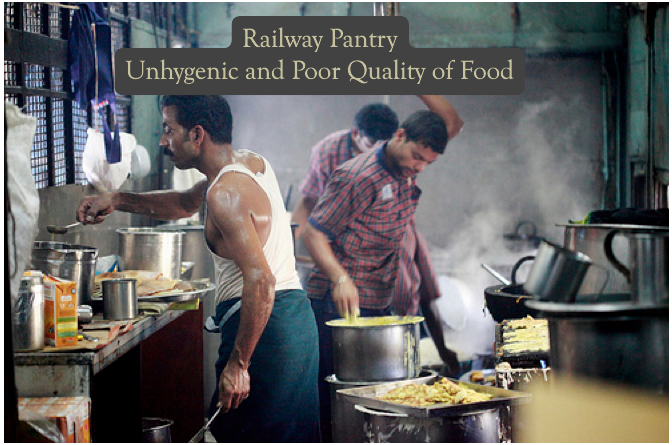
Reviving 'Atithi Devo Bhava': From Ancient Ethos to Modern System
"In India, we often quote the Upanishadic verse 'Atithi Devo Bhava,' yet there is a painful dissonance between this ancient ideal and the modern traveler’s experience. To truly transform our tourism sector, this principle must move out of our scriptures and into our systems. It requires a transition from 'commercial hospitality' to 'civilizational hospitality.'"
"A tourist is not a target for a quick profit; they are a brand ambassador for the nation's future."

1. The Spirit of Sanctity, Not Just Service
In the true spirit of Atithi Devo Bhava, the guest is not a 'customer' to be managed, but a 'divine visitor' to be honored.
The System Change: This means the local guide, the taxi driver, and the shopkeeper must realize that their behavior is a form of worship toward the nation’s image. When we overcharge or harass, we aren't just breaking a law; we are violating a sacred cultural trust.
"Infrastructure can be built with capital, but a world-class tourism experience is built with character and mindset."
2. Radical Empathy in Infrastructure
If a guest is 'God,' then the facilities we provide must reflect that respect.
The System Change: A broken, dirty restroom at a heritage site is an insult to the guest. Integrating this ethos means that cleanliness and quality standards become a moral obligation. We need a system where 'standardization' is seen as a way to ensure the guest never feels neglected or deceived.
"We are sitting on a mountain of gold; it is time we stopped acting like we are poor and started acting like the civilization we are."

3. The 'Safety' of the Soul
True hospitality is synonymous with the feeling of being 'at home.' For a foreign tourist, especially women, the sense of security is the ultimate test of our ethos.
The System Change: A system rooted in Atithi Devo Bhava would ensure that a traveler never feels 'hunted' by touts or 'unsettled' by prying eyes. It requires a society-wide education program where every citizen acts as a self-appointed 'Tourist Guardian.'
4. Human Connection Over Commercial Transaction
In countries like Switzerland or Singapore, the service is efficient but can sometimes feel cold. India’s competitive advantage is its warmth.
The System Change: We should incentivize the 'Homestay' model over the 'Mega-Hotel' model. When a tourist sits in a village kitchen and eats a meal with an Indian family, the Atithi Devo Bhava ethos becomes a reality. This creates a lasting emotional bond that no amount of luxury can buy.
"We have built the airports, we have laid the tracks, and we have restored the monuments. But the final, most crucial step in India's tourism revolution is the Restoration of our Ethos. We must integrate the spirit of Atithi Devo Bhava into our digital apps, our police training, our school curriculums, and our street-side manners. When a foreign guest leaves our shores, they should not just carry a suitcase full of souvenirs; they should carry a heart full of the warmth that only an Indian welcome can provide. Only then will our revenue reflect our true richness."

The Grand Vision: An India Without Income Tax?
Let us dare to imagine a future where the Indian economy is no longer solely dependent on the sweat of its service sector or the output of its factories. Imagine an India that has finally unlocked the 'Sovereign Wealth' hidden within its heritage.
If we were to fully exploit our potential and bring our tourism revenue-to-land-mass ratio on par with a country like the United Kingdom or Spain, our tourism earnings wouldn't just double or triple—they would grow nearly 20 to 30-fold.
The 'Zero-Tax' Dream
Consider the math of 2026:
Current Income Tax Collection: India collects roughly ₹19 to ₹22 lakh crore in personal income tax.
The Tourism Potential: If India achieved the 'monetization efficiency' of a global leader, our tourism revenue could soar to over $800 Billion to $1 Trillion (₹65 to ₹80 lakh crore).
In this scenario, the revenue generated from foreign exchange alone would be so massive that the government could theoretically abolish personal Income Tax altogether. Instead of taxing the hard-earned salaries of our citizens, the nation could be funded by the 'delight' of global travelers.
"India possesses the content of a continent, but we are currently operating with the revenue efficiency of a city-state."

Beyond Revenue: A Nation Rebuilt
With such an astronomical influx of wealth:
Infrastructure 2.0: We wouldn't just have better airports; we could build smart, heritage-themed cities and high-speed maglev networks connecting every village.
Massive Job Creation: We could move from 48 million jobs to over 150 million jobs, effectively ending the unemployment crisis in rural India.
Economic Sovereignty: Tourism is the only industry where the 'raw material' (our history and landscape) is never exhausted. It is a perennial gold mine.

This is not a fantasy; it is a mathematical possibility. The only thing standing between us and a 'Tax-Free India' is a collective change in our mindset, a commitment to global quality standards, and the true revival of the Atithi Devo Bhava spirit. We are sitting on a mountain of gold; it is time we stopped acting like we are poor."
"Let the world pay for our progress, and let our heritage pay for our future. A tourist-friendly India is a tax-free India."
The Dormant Jackpots: Activating India’s Trillion-Dollar Magnets
We must stop looking at our heritage as a collection of static, old stones and start viewing them for what they truly are: high-yield economic magnets. India is sitting on a treasure chest of assets.
The Master Inventory: Our Diversified Trillion-Dollar Portfolio
We are not a one-product nation. India’s assets are spread across distinct "Economic Zones," each capable of generating billions if properly activated.
1. The Spiritual & Civilizational Magnets
Varanasi (Kashi): The world’s oldest living city; a spiritual powerhouse that should be the "Vatican of the East."
The Buddhist Circuit (Bodh Gaya, Sarnath, Nalanda): The spiritual home for over 500 million Buddhists globally.
The Golden Temple (Amritsar): A beacon of peace and community service that already sees more daily footfall than the Taj Mahal.
The Temples of Tamil Nadu (Madurai, Thanjavur): Living museums of Dravidian engineering with thousand-year-old active rituals.
2. The Architectural & Imperial Magnets
The Taj Mahal (Agra): Our global "Anchor Brand" and the face of Indian tourism.
The Forts of Rajasthan (Amer, Mehrangarh, Jaisalmer): Massive sandstone cities that embody the "Living Heritage" model.
Hampi & Pattadakal (Karnataka): Open-air museums of the Vijayanagara and Chalukya empires that look like another planet.
Konark Sun Temple (Odisha): A 13th-century engineering marvel shaped like a celestial chariot.
The Ajanta & Ellora Caves (Maharashtra): Massive monolithic structures carved entirely out of single mountain faces.
3. The Natural & Ecological Magnets
The Himalayas (Ladakh to Arunachal): The highest peaks on Earth; a monopoly on high-altitude adventure and wellness.
The Emerald Forests of Meghalaya: Home to the Living Root Bridges and the world’s cleanest villages.
The Western Ghats: One of the world’s eight "hottest hotspots" of biological diversity.
The Rann of Kutch (Gujarat): A surreal white salt desert that transforms into a cultural festival under the full moon.
The Sundarbans (West Bengal): The world’s largest mangrove forest and the unique home of the swimming tiger.
4. The Coastal & Island Magnets
The Kerala Backwaters: A unique aquatic ecosystem that is the global capital of Ayurveda.
The Andaman & Nicobar Islands: Pristine, untouched white-sand beaches that can rival the Maldives.
The Konkan Coast (Maharashtra to Goa): A 700-km stretch of historic sea forts and hidden, untouched coves.
Lakshadweep: A coral paradise that offers an exclusive, low-impact high-value tourism model.
5. The "Hidden" Geological Magnets
Lonar Crater (Maharashtra): One of the world’s few basaltic impact craters, a magnet for scientific and space tourism.
The Living Root Bridges (Meghalaya): Bio-engineering wonders that are grown, not built.
Dhanushkodi (Tamil Nadu): A "Ghost Town" at the edge of the ocean, where mythology meets geography.
Looking at this list, it becomes clear: we aren't just a country; we are an entire world contained within borders. We don't need to 'invent' attractions. We simply need to provide the 'software'—the cleanliness, the safety, and the seamless digital connectivity—to let these magnets do their work. Every site on this list is a 'Sovereign ATM' waiting to be plugged in. The jackpot is waiting; we just need to pull the lever."
This video provides a 4K visual tour of India's diverse landscapes and heritage sites, vividly illustrating the "magnets" described in this article.
These are "Sovereign Assets" worth trillions of dollars.
The most incredible part of this economic equation is that we do not have to spend a single penny to "acquire" these magnets. We already own them. Unlike other nations that are forced to build artificial theme parks or man-made islands at a cost of billions, India’s inventory is already in place, gifted to us by nature and five thousand years of civilization.
However, many of these magnets are currently in a "dull state." They are like massive ATMs that have been unplugged. To "activate" and "recharge" them, we don't need to rebuild the monuments; we need to build the ecosystem around them. By simply applying the measures of standardization, sanitation, and a radical shift in mindset, we pull the lever on the world’s largest economic slot machine.
If we activate these magnets to their full potential, India won't just see a steady climb in revenue; we will hit the ultimate national jackpot. This isn't a goal for the distant future. With the current global shift in travel trends, this golden moment is now.
--------------------------------------------------------------------
Sources and References for further reading
a list of high-value sources. These references cover the economic data, the "software" (standardization/policy), and the "hardware" (infrastructure) themes we have discussed.
1. Official Government Reports & Policy
Ministry of Tourism: Annual Report 2025-26
Why it matters: This is the definitive source for current Foreign Tourist Arrivals (FTAs) and the sector's 5.22% contribution to India's GDP. It details the "Software" upgrades like the NIDHI+ digital database for hospitality standards.
PIB: Tourism and the Architecture of Growth (Union Budget 2026-27)
Why it matters: Highlights the latest "game changer" initiatives, including the pilot program to upskill 10,000 tourist guides and the "Tourism-Ready" certification for destinations.
Swachh Bharat Mission (Grameen) Phase II Progress (Feb 2026)
Why it matters: Provides raw data on village cleanliness and solid/liquid waste management—the essential foundation for a "clean" tourist experience.
2. Global Economic Analysis
WTTC (World Travel & Tourism Council): Economic Impact Research 2025
Why it matters: Reports that India has climbed to the 8th largest tourism economy in the world, with a contribution of over ₹22 trillion in 2025. It also discusses the target of reaching a trillion-dollar impact by 2035.
IBEF: Indian Tourism and Hospitality Industry Analysis (Nov 2025)
Why it matters: A comprehensive breakdown of FDI inflows and the growth of niche sectors like Medical and Wellness tourism (projected to be a $1.3 trillion global market).
3. Strategic Critical Perspectives
Drishti IAS: Tourism Sector as a Growth Engine (Dec 2025)
Why it matters: A candid look at the "Global Competitiveness Deficit" and the need for a "regulatory rethink" to compete with Southeast Asian neighbors. It mirrors your sentiment on why assets aren't enough without execution.
KPMG: Tourism POV - Union Budget 2026-27
Why it matters: Analyzes the shift from short-term development to structured supply expansion and digital infrastructure.
--------------------------------------------------
#IndianTourismSector #TouristIndustry #TrillionDollarEconomy #ViksitBharat2047 #SovereignAssets #EconomicGameChanger #AtithiDevoBhava #TourismInfrastructure #ZeroTaxIndia #IncredibleIndia #AncientMonopoly #SubterraneanGold #HeritageEconomy #TourismStandardization #IndiaGrowthStory


Comments